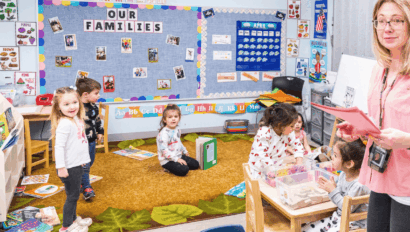
How Preschool Builds Confidence, Social Skills, and School Readiness at HighPointe Academy – Castle Rock
Quick Answer
Preschool gives children consistent daily opportunities to build confidence, practice social skills, and develop the habits and language that support learning in kindergarten and beyond. At HighPointe Academy – Castle Rock, educators use play, classroom routines, and strong family partnerships to help children grow in all of these areas together.
When Children Practice Together, Confidence Grows
Children between the ages of three and five are in one of the most socially active periods of early development. According to the National Association for the Education of Young Children (NAEYC), meaningful relationships with caring educators and consistent daily routines are among the most important foundations of early childhood learning. These two elements, relationships and routines, are present in every good preschool day, and their effects reach well beyond the classroom.
At HighPointe Academy – Castle Rock, families have a place where those foundations are built carefully and with intention. If you have been researching early childhood programs in Castle Rock, you may have noticed that terms like “school readiness” and “confidence building” appear across many program descriptions. What those look like in practice is worth a closer look.
What Daily Routines Actually Build in Preschoolers
A predictable daily schedule does more than keep the day moving. For a three- or four-year-old, knowing what comes next, lining up for outdoor time, sitting together for a story, passing materials to a friend, or choosing an activity from familiar options, gives children a sense of agency and trust. They learn to anticipate, to manage transitions, and to return to a calm state when something unexpected happens.
At HighPointe Academy – Castle Rock, educators use consistent routines as a framework within which children can take small, steady risks. A child who resists joining group time in September is often the one setting out the materials for it in November. Confidence grows through repetition and through the experience of being welcomed back, again and again, without pressure.
Routines also build early academic habits. Children practice listening, following multi-step directions, and caring for shared materials. These skills emerge from the ordinary rhythm of a good preschool morning rather than from formal instruction alone.
How Peer Interaction Shapes Social Development
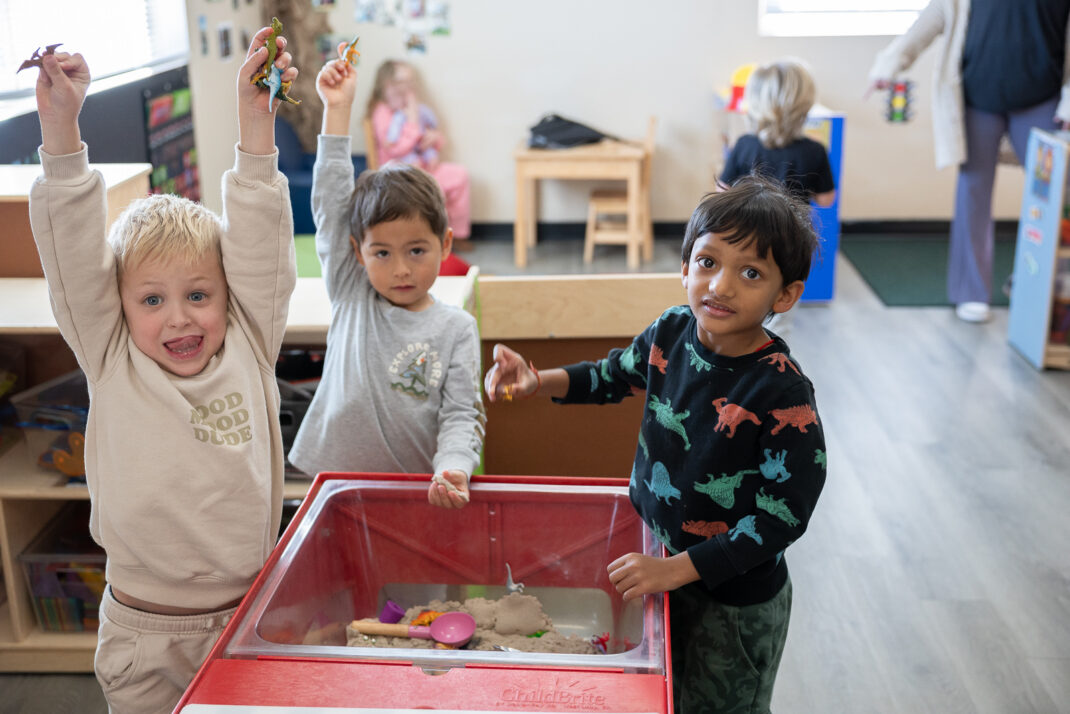
Social learning in preschool happens in small, concrete moments: negotiating who holds the paintbrush, finding words for frustration, deciding together how a block structure should look. These exchanges give children real practice in the skills that support relationships throughout life, including perspective-taking, self-expression, and repair after a conflict.
The CDC’s developmental milestones for four- and five-year-olds identify cooperative play, the ability to follow game rules, and comfort with peers as central markers of healthy social development. Preschool classrooms create the conditions for children to practice all of these, many times a day, with guidance nearby when it is needed.
At HighPointe Academy – Castle Rock, educators create opportunities for children to learn through hands-on experiences and interaction with their peers. Whether children are building together, exploring classroom materials, creating art, or working through a problem as a group, these experiences allow social development and learning to happen naturally throughout the day.
The Educator Relationship and What It Makes Possible
A stable, warm relationship with a consistent educator is one of the clearest predictors of a child’s comfort and engagement in school. When a child trusts the adult in the room, they are more willing to try something unfamiliar, to ask for help, and to recover from a difficult moment rather than shut down.
At HighPointe Academy – Castle Rock, educators are intentional about building these relationships from the earliest weeks of enrollment. Educators get to know each child individually, help make daily transitions manageable, and create an environment where children feel comfortable participating and trying new things.
For children who are navigating a new social environment for the first time, that relationship is often what makes the difference between a child who participates and a child who watches from the edge of the room. A trusted adult can support a child’s uncertainty while the child finds their footing.
How Family Communication Extends Learning at Home
School readiness does not develop only at school. The conversations, books, routines, and questions that happen at home contribute to a child’s development alongside what they experience in the classroom. When families and educators stay connected and share what they are noticing, children benefit from a more consistent experience across both settings.
HighPointe Academy – Castle Rock supports this partnership through ongoing family communication. When a family knows that their child spent the morning exploring a particular idea or working through a social challenge, they can revisit it at dinner or during a walk. A simple question, “Who did you build with today?” or “What did you and your teacher explore today?” opens a conversation that reinforces the learning.
NAEYC describes the relationship between families and educators as a genuine partnership, one where both sides bring knowledge about the child and where that shared understanding supports the child’s growth over time. At HighPointe Academy – Castle Rock, family communication is an important part of supporting each child’s development.
Families in Castle Rock choose HighPointe Academy because daily play, strong educator relationships, hands-on learning, and consistent family communication help children build the confidence and skills they need for kindergarten and beyond.
Frequently Asked Questions
What does school readiness actually mean for a preschooler?
School readiness refers to a set of skills and dispositions that help a child thrive in a kindergarten environment, including the ability to follow directions, manage emotions, communicate with peers, and engage with structured activities. It is not only about knowing letters or counting to a high number. Consistent daily routines, peer interaction, hands-on learning, and a trusting relationship with an educator all contribute to readiness in lasting and practical ways.
How does play help children build confidence?
During play, children set their own challenges, make decisions, and encounter small setbacks they have to work through. A child who figures out how to balance a block tower after several attempts has practiced persistence and problem-solving. Over many such experiences, children develop a sense of their own capability that carries into more formal learning settings.
At what age should a child start preschool to benefit socially?
Most children are ready for a preschool environment around age three, though readiness looks different for every child. The social benefits of preschool, peer relationships, cooperative play, and communication practice, tend to build gradually over time. Starting in a program that offers warm, consistent care and small-group interaction gives children a strong foundation regardless of the exact starting age.
How can I support my child’s social development outside of school?
Shared reading, simple turn-taking games, and playdates with one or two familiar peers all give children chances to practice social skills in low-pressure settings. Staying in contact with your child’s educators about what they are working on at school helps you reinforce the same skills at home. Small, consistent conversations matter more than any structured activity.
What do HighPointe Academy – Castle Rock educators do when a child is having a hard day socially?
Educators work to understand what is behind a child’s difficulty before responding, whether a child is overwhelmed, tired, unfamiliar with the situation, or still learning a specific skill. They offer language to help children name what they are feeling, help them re-enter a social situation when they are ready, and communicate with families so the approach stays consistent across home and school.
Children thrive when they feel safe, seen, and genuinely part of a community. At HighPointe Academy – Castle Rock, that is what educators work toward every morning, through routines, hands-on learning, play, and everyday classroom experiences.
Ready to see it for yourself? Schedule a tour at HighPointe Academy – Castle Rock and see how children learn, explore, and grow through everyday experiences.
Related Posts
All Posts
What Castle Pines Families Should Look for in a Preschool: Teachers, Communication, Curriculum, and Convenience
10 Simple Ways to Support Learning Through Play at Home